

Salesforce Agentforce Revenue Management powered by SAP data
The configuration logic, pricing rules, dependencies, and bills of material behind complex products live in SAP. That logic decides which option combinations are valid, what each customer pays, and what production will build. The sales reps who need it work in Salesforce.
Salesforce Agentforce Revenue Management (RLM/Revenue Cloud) handles the commercial side: quote creation, approvals, billing plans, revenue workflows. It doesn’t run the SAP variant configuration, pricing, and order logic that complex products depend on. SAP ECC and S/4HANA hold that intelligence and the engines that execute it, but they were never built as the day-to-day workspace for a sales team. So reps switch between systems to build a single quote, reconcile SAP and Salesforce by hand, and introduce errors on the way.
Bringing SAP Variant Configuration into the Salesforce quoting flow
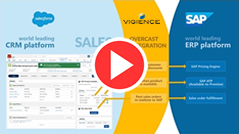
Vigience Overcast connects Salesforce to SAP in real time. The configuration logic stays in SAP. Salesforce becomes the interface the sales team uses.
When a rep configures a product in Salesforce, Overcast calls SAP live. Product options, validations, dependencies, BOM explosion, and pricing come back from SAP as the rep works. SAP flags incompatible combinations as the rep selects them. Pricing reflects the customer’s specific conditions. The bill of material returned is the one production will use to manufacture the product. Once the rep accepts the quote, it flows into SAP as a sales order with no re-entry.
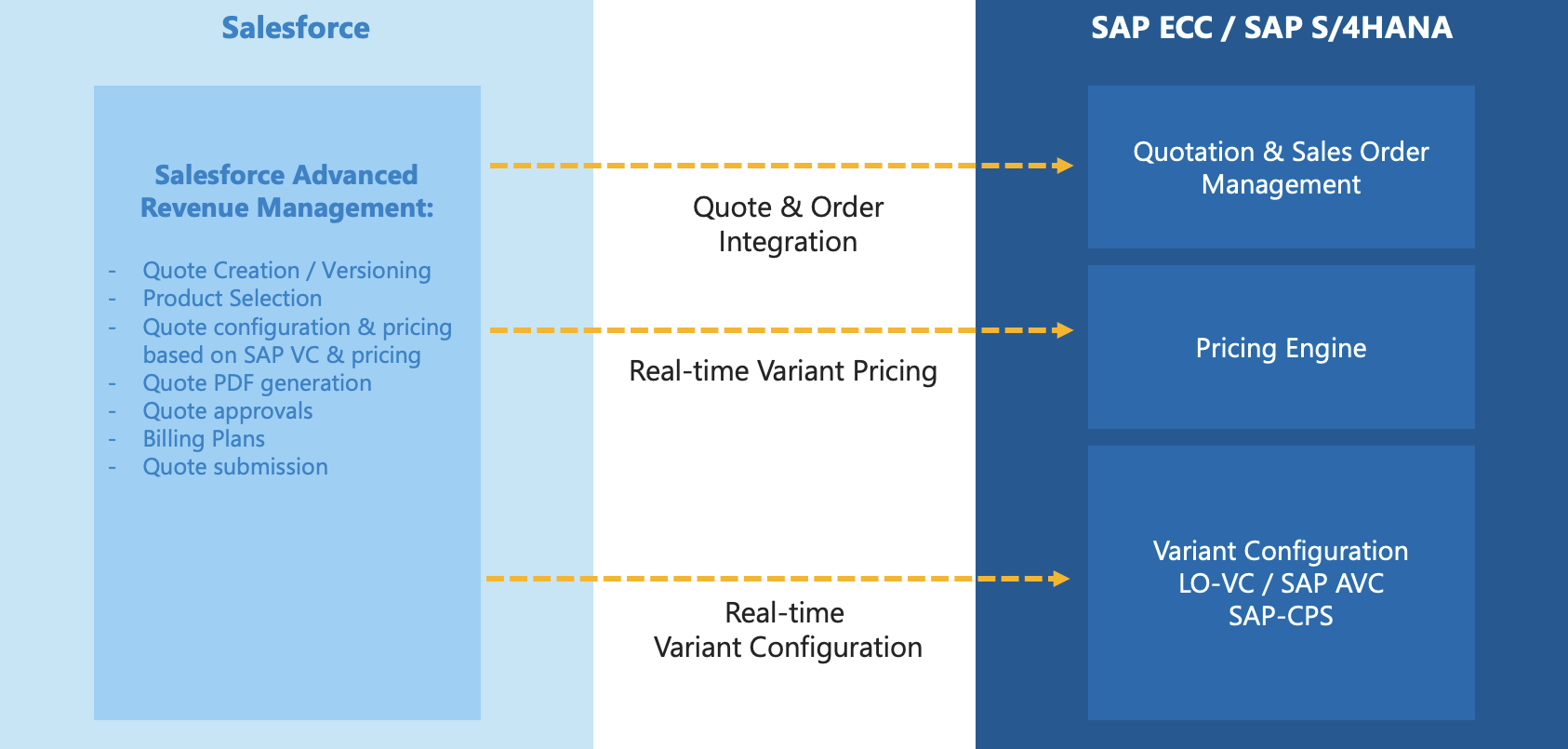
This keeps SAP as the operational source of truth and avoids the cost of mirroring rules in two systems. When a configuration model changes in SAP, Salesforce reflects the change on the next call. No migration cycle, no out-of-sync rules. Sales teams get one workspace, correct pricing on the first pass, and quotes that don’t need reconciling before they go out.
It fits companies with complex product models, configuration rules that change often, or organizations where SAP needs to stay the operational backbone.
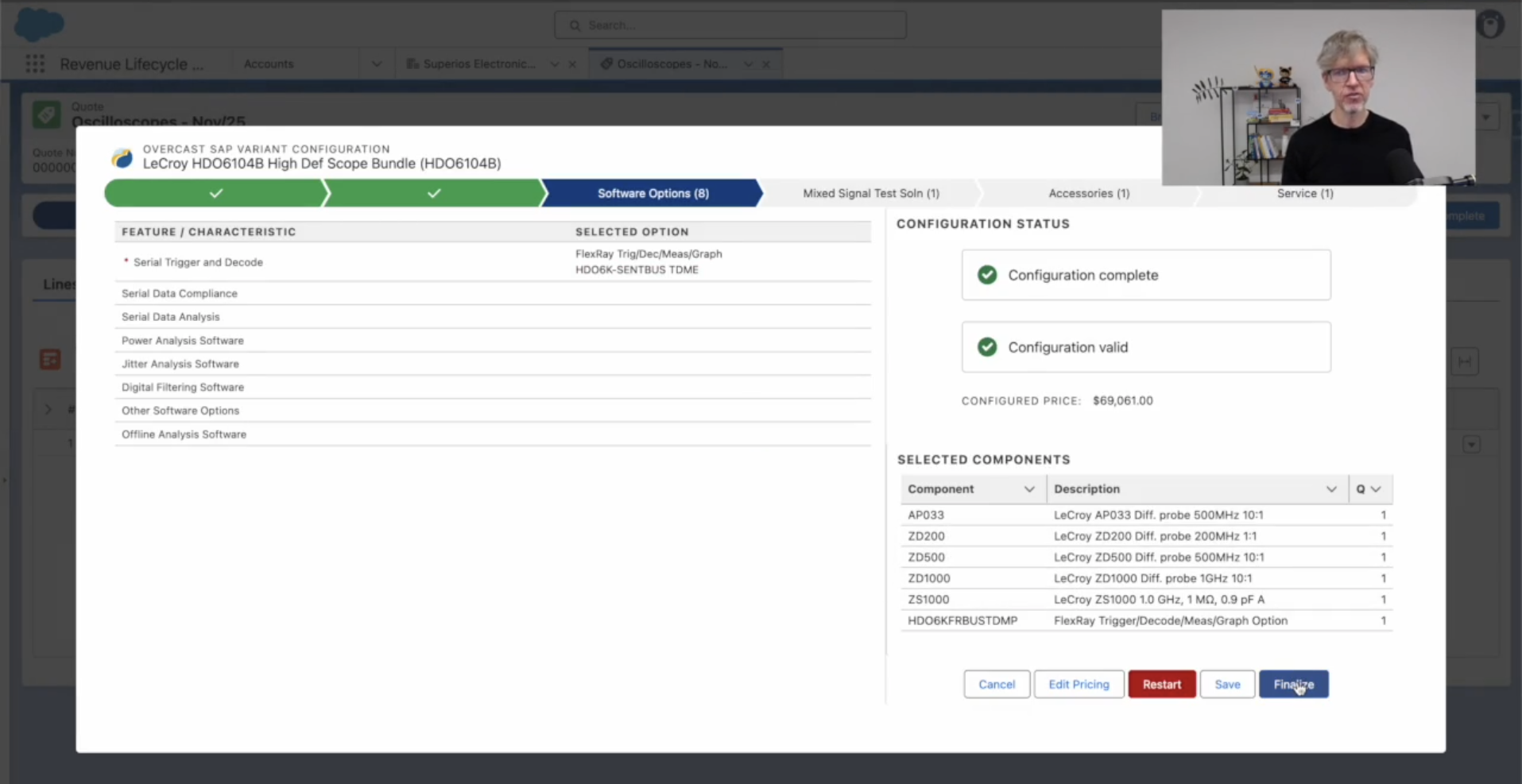
Watch the demo: Real-Time SAP LO-VC/AVC in ARM
When migrating the model into Salesforce makes sense
For companies with simpler, stable configuration models, Overcast can also migrate SAP Variant Configuration rules and dependency scripts into Salesforce. The migration covers classifications, configurable products, and configuration logic, with no manual re-entry. Salesforce then owns the quoting process, and SAP focuses on order fulfillment downstream. This path works when real-time SAP access isn’t a requirement.
What this means for your business
Sales teams work in Salesforce. SAP keeps driving the logic that runs the business. No duplicate maintenance, no manual reconciliation, and no forced choice between the system of record and the system reps want to use. Overcast adapts to how your business operates.



Direct Contact
+1 (415) 226-9867
Vigience, Inc.
WATCH THE OVERCAST TEASER VIDEO
Social Media Channels


Compliance Certifications
Vigience Overcast is SAP certified


