
See how Vigience Overcast enables HA Group to connect three ERP realities to one global Salesforce template for a reliable, worldwide view of customers and sales.
How HA Group Turned Scattered SAP Data into One Standardized Customer 360 View
One global Salesforce template across 10 countries, connecting SAP ECC, S/4HANA, and non-SAP systems with Vigience Overcast
3 → 1
Three ERP realities connected through one global Salesforce template
10
Countries managed through the same standardized global rollout
Industry
Specialty chemicals for the global foundry industry.
Use Case
SAP-integrated Customer 360, with real-time inbound integration of SAP customer, sales, and order data into Salesforce and parallel support for ECC and S/4HANA.
Short Customer Portrait
HA Group (Hüttenes-Albertus Chemische Werke GmbH) is the world market leader in specialty chemical products for the global foundry industry. Headquartered in Düsseldorf, Germany, the company has around 1,800 employees, generates about €650 million in annual revenue, and serves customers across all major global markets.
www.ha-group.com
System Landscape

“SAP is our single point of truth, but Salesforce gives us the global view we need to act on that data.”

Caroline Kubiczek
Head of Digital Transformation, HA Group
Why a Global Business Needed One Standard
HA Group develops the binders, coatings, feeder systems, and additives that foundries worldwide use to produce metal castings for vehicles, machinery, and industrial equipment. The company has led this market for decades and built an international business with customers, sales teams, and operations across many countries.
As that presence grew, so did the complexity behind it. Each country had developed around its own systems, processes, and local requirements. That worked at a local level, but it made customers and commercial activity harder to manage as one global business.
The company operated everywhere, but it did not operate the same way everywhere. The global Salesforce rollout has to cover up to 10 countries with very different technical starting points. Some markets ran on SAP ECC, others were already using SAP S/4HANA, and some had no SAP system at all. Despite those differences, the commercial organization needed one shared view of the same customer, sales, and order information, presented consistently to teams and management across the business.
This shared view was essential to create transparency across markets and provide a consistent basis for decision-making. Management needed to be able to compare developments across countries, understand customer and sales trends, and connect commercial performance with the underlying SAP data. The relevant information was already available across SAP, local systems, and other data sources. The key was to connect these sources and make the information readily accessible in a consistent format across markets and functions. As Kubiczek puts it: “It is essential for a world market leader to have a CRM system.” Standardization was a practical requirement. It was how HA Group could connect countries and sales teams, speed up its processes, and give management a reliable global view of customer and business activity, whatever ERP each country ran.
Why the Previous Salesforce Model Could Not Scale
HA Group had already introduced Salesforce in 2017 and 2018. Over time, though, the system and its SAP interfaces got more and more customized. What began as a way to meet specific requirements gradually turned into a setup that was hard to scale and maintain. The custom-built integration model eventually reached its limit and could no longer support the company’s global ambitions.
In 2025, HA Group decided on a complete restart. Salesforce would remain the global CRM and engagement platform, while SAP would remain the system of record. This time, the company wanted to stay as close to standard as possible and move away from individually built integrations.
“We had customized so much that the previous setup eventually hit a wall. It no longer worked, so in 2025 we decided on a complete restart.”
The new model also had to let the commercial transformation move forward without waiting for every country to finish its migration to S/4HANA.
One Standardized Salesforce Experience Across ECC, S/4HANA, and Non-SAP Systems
The restart was built around a clear principle: stop adding customization and set a repeatable standard instead.
HA Group needed an integration approach that could connect SAP ECC and SAP S/4HANA in parallel, while keeping one standardized Salesforce experience across countries. It also had to allow for real local requirements without turning every rollout into a brand-new technical project.
Vigience Overcast met those criteria. “We wanted a standardized solution that supports ECC and S/4HANA without creating additional technical overhead,” Kubiczek explains. As a Salesforce-native application, Overcast became the SAP integration layer beneath HA Group’s global Salesforce template. Relevant customer, sales, and order information from SAP could be shown directly inside Salesforce, while ECC and S/4HANA kept running in parallel behind the scenes.
Instead of designing and maintaining a separate integration for every country rollout, HA Group can apply one standardized pattern and adapt it where a market really needs something different. Because that pattern works with the systems countries already use, the commercial organization can roll out Salesforce country by country without waiting for the wider S/4HANA migration to finish.
SAP ECC, SAP S/4HANA, and non-SAP country systems all connect through Overcast to one global Salesforce template. The current integration is mainly inbound: customer master data, sales information, and order data are made available inside Salesforce in real time, or synchronized where that fits better. Outbound write-back is planned for a later phase.
One Salesforce Experience Across Different ERP Realities
The rollout began with countries that had very different system landscapes. The United States went live using SAP ECC. Mexico came next without SAP. Germany then went live on ECC, and India, which already runs S/4HANA, followed in September 2026.
Technically, those countries are not the same. From the user’s side, that difference should matter as little as possible. Sales teams and management work in one standardized Salesforce environment, while Overcast handles the connection to the relevant backend system. Users do not need to know whether an account sits in ECC or S/4HANA before checking customer details, sales figures, or order history.
A Project Experience That Created Confidence
Because Overcast runs natively inside Salesforce, HA Group did not need to add another environment with its own servers, hosting, backups, patching, and administration. New country requirements, such as particular fields, objects, or local data, were handled within that one architecture rather than spun up as standalone projects.
When a new integration requirement came up, Kliqxe (a Vigience and Salesforce implementation partner), Vigience, and HA Group’s internal SAP team worked it out directly, which kept the interface work from becoming a bottleneck for the wider program.
It took around seven months from the restart decision in March 2025 to the first go-live in the United States. Mexico followed in December 2025, and Germany went live on schedule on 15 April 2026. As of June 2026, the first three countries are live with 126 users, and about 50 more went live in the next stage.
Caroline Kubiczek puts the value in plainer terms: “For me, this is the constant I know will not go wrong. I bring Kliqxe, Vigience, and our internal SAP team together, and they take care of the technical work. That gives me real peace of mind.”
From SAP Searches to Agentic-AI Readiness
Before the new setup, finding the right information could be slow. Now the relevant SAP information sits inside Salesforce, alongside accounts and opportunities, where commercial teams already work. Sales teams get less friction in daily work; management gets data from different countries in one view for faster, better-informed decisions.
“Reporting is easier, information is available faster, and the combination of SAP and Salesforce data feels much more intuitive,” says Kubiczek.
A few clicks now reach the same answers, and a clearer view of the coming months helps HA Group improve its sales forecasting instead of working without it.
With that foundation in place, HA Group is turning to the next phases. Outbound integration is planned for a later stage, so information and processes can flow back from Salesforce into SAP.
Overcast can make SAP information available inside Salesforce, but data needs to be clean and up to date in both systems. As Kubiczek puts it: “Only a clean and accessible data foundation makes further automation and future AI use cases truly valuable.”
Further countries are expected to move onto the global Salesforce template during 2027 and 2028. As the rollout continues, the same standardized integration pattern moves with it, so countries can join from ECC, S/4HANA, or non-SAP environments without making the whole program wait for one uniform ERP landscape.
The Recommendation
Months in, the decision has held up. New requirements are a short exchange between Kliqxe, Vigience, and the internal SAP team rather than a project of their own, and for the transformation lead, that reliability is the headline. Kubiczek sums it up:
“I’m happy with the decision. It gives me a kind of peace of mind. I know this part won’t go wrong.”
The Vigience Applications Powering HA Group’s Success
HA Group built its commercial platform on a standardized stack, treating SAP as the system of record and Salesforce as the system of engagement:
Link to: applications > solutions > SAP-integrated customer 360SAP-integrated
SAP-integrated
Customer 360
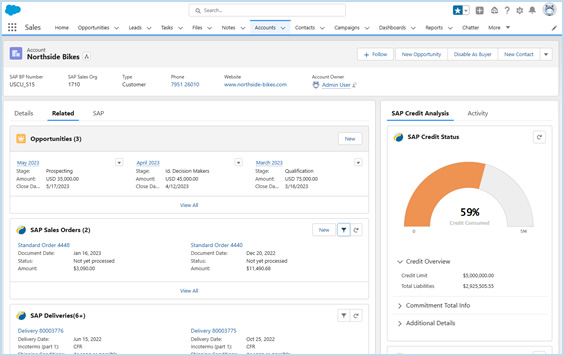
A complete 360° customer view with 24/7 self-service access to orders, invoices, and credit status.
Link to: applications > solutions > SAP-integrated order managementSAP-integrated
SAP-integrated
Order Management
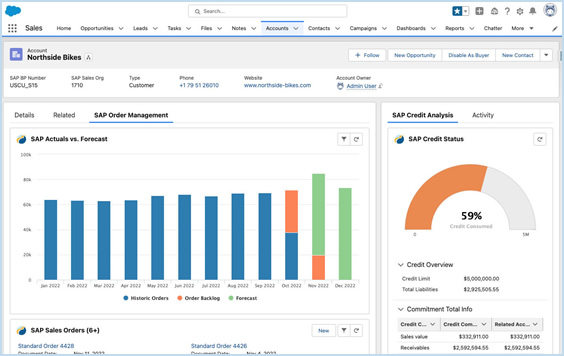
Increased on-time delivery and reduced processing costs through real-time order validation that eliminates double-entry.
Direct Contact
+1 (415) 226-9867
Vigience, Inc.
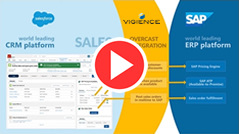
WATCH THE OVERCAST TEASER VIDEO
Social Media Channels


Compliance Certifications
Vigience Overcast is SAP certified
